

TESTING
FLEXIBLE PACKAGING
FOR LEAKS
Leaking product packaging is the worst nightmare of every product owner. Especially if these leaks cannot be detected before the end user receives the product. By systematically testing for leaks in your flexible packaging, you minimise the percentage of leaking packages. This prevents customer complaints about poorly sealed packaging and at the same time reduces waste. Does that sound like a good idea?
Leak testing for flexible packaging
At Oxipack, we have multiple leak testers for flexible packaging. They have been specifically developed for off-line sample testing of flexible MAP-packaging. Modified atmosphere packaging (MAP) can be used to manually test packaging with a little air or protective inert gas. Such as sachets with coffee, bags of nuts, grated cheese, oven rolls, coffee pads or pet food. By systematically testing for leaks, you minimise the percentage of leaking packaging, avoid complaints about packages that are not sealed properly and reduce food waste.
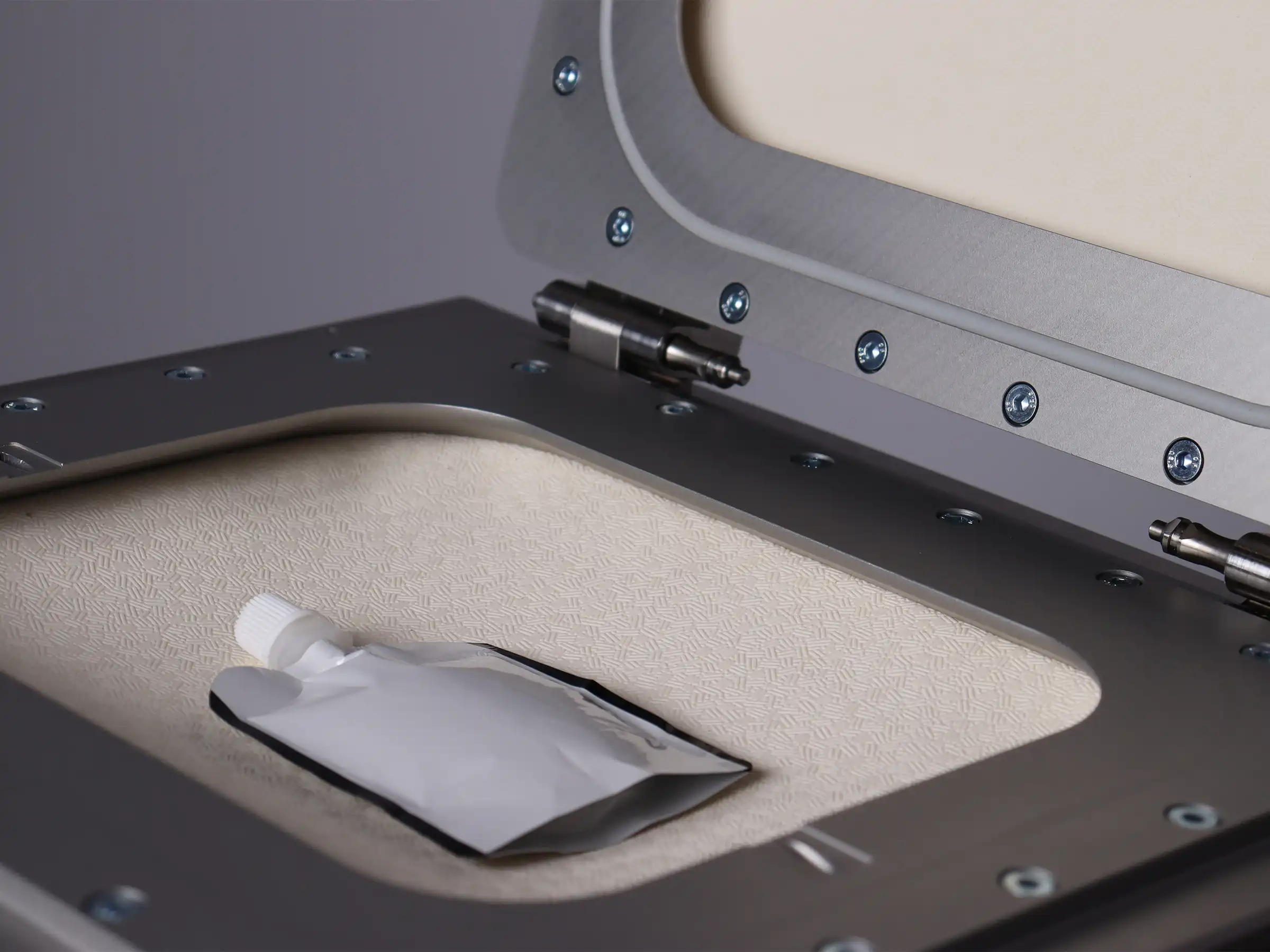
The vacuum decay test method is used for flexible pouches, stick packs, sachets, etc. We are also seeing increased requests for leak detection for paper-based flexible packaging. Our tester uses pressure differences by placing the packaging between two flexible rubber membranes. After the cover has been closed, a deep vacuum is created in the test chamber. A very small test space is created without damaging the packaging. Using this unique method of measurement, both micro-leaks and large leaks are detected without having to adjust any settings.
Flexible packaging leak detection machine
Our standard solution is used for flexible packaging, named by the Stationary Leak Tester or Pouch Leak Detector. The leak tester contains the following features:
- You can use the Stationary Leak Tester for all kinds of different products and packages. For example, it can be used for pet food packages, but also for chocolate or milk powder packages. With one pair of settings you are able to test a wide variety of flexible packages and products.
- The Stationary Leak Tester (SLT) can measure a variety of products simultaneously, depending on the version and size of the packaging.
- Simple to operate: a green light indicates the packaging is leaktight and a red light indicates a leak.
- Identical and different shapes of packaging can be tested at the same time.
- If a leak is discovered when testing more than one item at a time, the SLT indicates that a leak is present.
- Due to its scale and robustness, the Stationary Leak Tester is ideally suited for factory or industrial use.
- The measuring cycle is completed within thirty seconds and leaks detected down to 10 µm.
- The equipment reads according to the Standard Test Method for Non-destructive Detection of Leaks in Packages by Vacuum Decay Method (ASTM F2338).
STATIONARY LEAK TESTER
The Stationary Leak Tester can test flexible pouches from 1 gram to 5 Kg. It tests in a non-destructive way and all packaging can be tested with the same settings.
STATIONARY LEAK TESTER XXXL
The Stationary Leak Tester XXXL is the solution for leak testing flexible packaging up to 25 Kg. It is commonly used for testing milk powder packaging for leaks, or for testing pet food packaging.
Liquid POUCH LEAK DETECTOR
Pouches can be tested in the Stationary Leak Tester, but especially for flexible MAP-packaging combinated with liquid-filled pouches, this Liquid Pouch Leak Detector is developed. Our customer asked for a 100% test on leaks within their production line. This tester is able to test 80 of these combined pouches per minute.
Liquid Pouch Leak Detector
THE ROTARY
The Rotary is an in-line machine for measuring flexible MAP-packaging. It is able to test up to 120 individual packages per minute. The Rotary is detecting leaks in a non-destructive way by the vacuum decay method (ASTM F2338).
The Rotary
The Importance of a Non-Destructive Leak Test for Flexible Packaging
- Preserving Packaging Integrity: Flexible packaging materials, such as films and laminates, are often thin and delicate. Traditional destructive testing methods, such as puncturing or cutting the packaging, can compromise its integrity and render it unusable. Non-destructive leak detection techniques allow for thorough testing without damaging the flexible packaging, ensuring that it remains intact and functional.
- Ensuring Product Freshness and Quality: Flexible packaging is widely used for perishable products, including food, pharmaceuticals, and cosmetics. Any leaks in the packaging can compromise the product’s freshness, quality, and safety. Non-destructive leak detection enables the early identification of leaks, ensuring that the products inside remain protected and maintain their desired attributes.
- Cost Savings: Detecting leaks in flexible packaging early on prevents the distribution of defective products and potential product recalls. This helps companies avoid significant financial losses associated with wasted inventory, customer complaints, and damage to brand reputation. Non-destructive leak detection provides a cost-effective solution by minimizing the risk of packaging failures and the subsequent need for corrective actions. Additionally, with non-destructive leak detection, there are no additional costs incurred during the testing of packaging, as approved packages can be reintroduced into the production line after testing.
- Compliance with Safety Standards: Flexible packaging used for food and pharmaceuticals must comply with strict safety and hygiene standards. Non-destructive leak detection methods help manufacturers meet these regulatory requirements by ensuring that their packaging effectively seals the product and prevents contamination. This is crucial for consumer safety and maintaining regulatory compliance.
OUR
INDUSTRIES
FOR LEAK DETECTION
Not sure if our leak detection methods are applicable to your product? Check out our industries below for more information.
-

Food packaging
-
Pharmaceutical packaging
-
Cosmetic packaging
-

Other packaging
FREQUENTLY ASKED QUESTIONS
How much can leak detection save?
With non-destructive leak detection, you can achieve considerable savings. Leaking packages cause losses across the entire chain and could inflict significant damage to a brand’s image. Each factory is unique and savings are relative to the circumsances, the product and the raw materials used. Non-destructive leak testing allows for even bigger savings: all approved products can go back in the production line. You can imagine our machines have recouped themselves within a couple of months.
How can we lower our leakage percentage?
Your current percentage needs to be established first. Accurate analysis of the actual leakage percentage is key for chain optimisation.
The number of leaking packages produced can be tricky to pin down. In-depth research often demonstrates that the leakage percentage is much higher than originally estimated. Then there are all manner of considerations and invested interests at play and of course views on leak detection may differ. No one wants to halt a production line, however this may result in large numbers of packages having to be destroyed further down the chain.
Focus on the source: the packaging machine. Once it is known how many leaking packages it produces, you can have the machine, and therefore the leakage percentage, rapidly under control. Systemic leaks can be detected by methodical spot checking. Random leaks can only be traced by a 100% leak detection system.
How does Oxipack's leak testing method work?
Each Leak Tester, reduces the space surrounding the packaging to a minimum. This is done using flexible membranes and/or moulds mirroring the form of the product and leaving as little space as possible between this and the product. The space between the rubber form/mould and the actual packaging is subjected to a vacuum. The equipment measures the precise air pressure and then repeats this seconds later. If there is a change in pressure between the two measurements, then there is a leak. Even though pressure sounds rough, no stress is put on the package or the product itself. The membranes embrace the product so gently that when the pack is OK, not even a potato crisp is cracked.
How accurate is the Stationary Leak Tester?
The Oxipack leak testing equipment can detect very small perforations in vacuum packaging and soft packages down to 10 micron (µm). That’s one-hundredth of a millimetre. This places the equipment as the most accurate non-destructive micro leak testing equipment available to the packaging industry. It allows you to check that your lines are packaging products as airtight and leak-proof as possible, preventing complaints and quality issues through deterioration.
How fast does the Stationary Leak Tester work?
The complete leak test is finalised within about 30 seconds. Testing a small product package will be a couple of seconds faster than testing relatively larger packages.
Can leak detection equipment also be hired?
Of course! We have several rental leak detection equipment ready for shipment! And our special crates will make sure the Leak Tester(s) arrives in perfect condition. Getting started is easy: just put the plug in the power socket and connect compressed air. You can now turn on your leak tester and start testing for leaks.
Operation is simple, place the package inside and within approximately 30 seconds the machine will indicate whether the package is airtight. This will give you a rapid and accurate reading of the packaging performance of a particular packaging line.
CAN MY FLEXIBLE PACKAGING BE TESTED?

CAN MY FLEXIBLE PACKAGING BE TESTED?
Are you ready to make a lifelong impact in your business today? Stop wasting quality, time and money. Instead, choose Oxipack for detecting leaks in your packaging! Click below to request advice and see how our equipment can match your packaging specifications.