
PHARMACEUTICAL
PACKAGING
TESTING
Pharmaceutical packaging must be leak tight for several reasons. The quality of the packaging is critical for the stability of the content, which you can guarantee with leak detection. You need accurate pharmaceutical packaging testing procedures to minimize recalls and reduce associated costs.
In the past, manufacturers used probabilistic test methods in the pharmaceutical industry. Nowadays, you can find deterministic and non-destructive pharmaceutical packaging testing methods that provide reliable testing of defects and leaks. For instance, leak testers are useful in the pharmaceutical industry since they deliver consistent results and improve packaging quality control. When you use non-destructive leak detection methods, package validation is simple due to the availability of reliable and quantitative test data.
Let’s explore the advantages of pharmaceutical package leak detection, the leak test procedure, the different types of pharmaceutical packaging and how our leak test solutions align with USP 1207 guidelines.
Leakage test in pharmaceutical
Pharmaceutical packaging testing technologies ensure that your medicines and drugs comply with the correct package integrity and it improves the quality control. Products in pharmaceutical industries are prone to spoilage, and leaks in the packages or bottle seals can lead to air penetration and make the product unsafe for consumption. Most pharmaceutical products undergo multiple sterilizations and require package testing at all stages. The leak testing method is applied to all types of pharmaceutical packaging like pouches and sachets, packs and flexible or rigid containers. The products will reach the consumers in the intended state – safe for consumption.
Pharmaceutical testing also minimizes product loss, especially if you use in-line detection methods. When you test for leaks after manufacturing, you have to investigate the entire process to find the source of the leak. However, if you use in-line testing, you can find where the packaging fails in real-time and prevent loss of time and product wastage. While the initial investment in a leak detector can be costly, it improves efficiency in the manufacturing process.
Types of pharmaceutical packaging
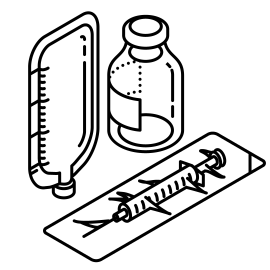
Packaging in pharmaceuticals varies depending on the drug. For instance, primary packages come into close contact with the drugs and include vials, ampoules, blister packs and prefilled syringes. Pharma industries combine drugs and medicine with boxes, cartons and injection trays to ease shipping. Whether your company uses ampoule packaging for liquids or vials, you need to conduct leak tests to prevent cross-contamination and ensure the drugs are safe. Some of the popular primary packages for pharmaceutical products include:
-

Ampoules packaging
They are used for packaging a specific number of liquid drugs. Most drug manufacturers use glass or plastic materials for single-dose medicines. -
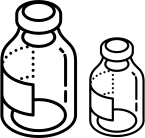
Vials packaging
Usually made of glass and plastic and often store liquid or powder drugs. They are mostly used for vaccines and other injection drugs. -
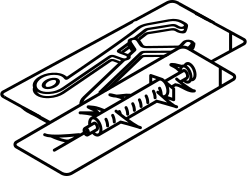
Medical devices
Medical devices, such as hypodermic needles and surgical pincers are packed in sterille plastic for safety reasons.
Leak test procedure pharmaceuticals
A leak test procedure in pharmaceuticals is a systematic process used to check the integrity of packaging or containment systems to ensure that there are no leaks or breaches that could compromise the quality, safety, or efficacy of pharmaceutical products. A pharmaceutical test procedure may vary depending on the product, materials, guidelines and standards, but a leak test pharma procedure typically involves the following steps:
- Select the appropriate testing method: There are various methods available for pharmaceutical packaging testing. At Oxipack, the most commonly used method is the non-destructive vacuum decay method. This method is most suitable for the different packaging types in this industry and is the most suitable method to meet the guidelines and requirements of this industry.
- Prepare the test samples: Gather the representative samples of the pharmaceutical packaging or containment systems that need to be tested for leaks. Ensure that the samples are in the intended state and condition as they would be during actual use.
- Set up the testing equipment: Set up the necessary equipment based on the selected leak testing machine. Oxipack configures the machine settings to match your packaging.
- Conduct the leak test: Perform the leak test.
- Record and analyze the results: Document the test results, including any observed leaks or abnormalities. Analyze the data to determine the presence of a leak.
- Evaluate the acceptability of the samples: Compare the test results against predetermined acceptance criteria or specifications. Determine whether the samples meet the required leak tightness standards or if further actions are needed.
- Document the procedure: Maintain comprehensive records of the leak testing procedure, including the test method, equipment used, sample details, test results, and any corrective actions taken.
The pharmaceutical leak tester machines
Product integrity is critical in quality control, especially in pharma industries. That’s why drug manufacturers apply various pharmaceutical packaging testing methods before packaging. After the test, the packages would be discarded. The current non-destructive testers ensure closed container integrity and identify even micron leaks or defects in the packages. The Oxipack CCIT leak tester is a solution for the pharmaceutical and biological industries, which require high-precision leak testing for various container types, such as bottles, vials and ampoules.
CONTAINER CLOSURE INTEGRITY TESTER (CCIT)
The CCIT is the solution for high-precision leak testing in the pharmaceutical industry. The flexible and FDA approved membrane can take the form of a range of container types such as vials, ampoules and bottles. Moreover, the Oxipack CCIT leak tester is designed to deliver speedy performance with two tests per minute. Its screen displays a clear overview with different settings and important test result indicators of time and pressure. There is no need to change the entire test chamber for different containters. The CCIT measures according to the non-destructive detection of leaks in pharmaceutical bottles by vacuum decay method ASTM F2338.
Container Closure Integrity Tester
BOTTLE LEAK TESTER
Apart from the specially designed CCIT machine, other machines are used in this industry to test products for leaks. The Bottle Leak Tester is able to test the top and seals of bottles. The BLT embraces the top of the bottle and checks if there are any leaks in the top or seal, with its FDA approved membrane.
Bottle Leak Tester
STATIONARY LEAK TESTER
There are also flexibly packaged pharmaceutical products, such as infusion bags. This type of packaging is tested in our Stationary Leak Tester. The pharmaceutical packaging is placed between two flexible membranes. After closing the lid, a deep vacuum is created in the test chamber. This creates a very small measuring area without damaging the packaging. With this unique measuring method, you can detect both micro leaks and large leaks without having to change any settings.
Stationary Leak Tester
IN-LINE TESTING SOLUTION FOR PHARMACEUTICAL PACKAGING
Oxipack has introduced tailor-made in-line leak detection solutions for various industries. These testing systems can be introduced into your packaging production line. The automated leak tests check for defects throughout the production line, improving quality control. This way, the production and integrity check is executed very efficiently. The in-line machine is able to carry out a 100% check for leaks. You get immediate feedback on the packaging integrity of your products.
The Rotary
Vacuum Leak Test in Pharmaceutical Industries
The vacuum decay leak test identifies micron holes and leaks in plastic or glass containers filled with liquid or powder. You can use non-destructive testing for pharma testing in vials, oil-based liquids or powder.
The vacuum decay test works as follows. It utilizes a vacuum chamber around the sample. Pulling a stable vacuum level around the sample allows for measurement of the transducer(s) to determine any gas or liquid transfer from inside the package which will disturb the vacuum level and indicate the presence of a defect. The test detection method is sensitive to small leaks, which is ideal for drug containers. Besides, the cost-effectiveness makes it suitable for high-volume industries that require quick and accurate tests.
Pharmaceutical products are essential
Pharmaceutical products are essential for human survival, and the packaging needs to be safe and durable to minimise contamination. Not only for drug packaging but also for pharma tools, like syringes, valves and other sterile closed containers. Companies can rely on our pharma testing and container closure integrity testing (CCIT) solutions to improve the stability and quality of packages and pharmaceutical products.
Please contact us if you have any questions or want some advice about pharmaceutical packaging. Our experts know all there is to know about this type of packaging and we will be happy to work with you to find the best testing solution for your packaging.


