

EASY
LEAK TEST FOR
VACUUM PACKAGING
Even the smallest leaks in your vacuum packaging could affect the quality of your product. These micro leaks occur during the manufacturing process of your packaging and it can be very difficult to detect them. We developed a solution.
Airtight vacuum packaging
It is very important that vacuum packages are truly leak tight, because it helps to preserve the quality and safety of the packaged product. Air is removed in vacuum packaging, which slows down the rate of oxidation, which in turn can cause spoilage, discoloration, and off-flavors in foods. Aditionally, vacuum packaging can help prevent the growth of harmful bacteria that require oxygen to survive. If a vacuum pack is not leak tight, oxygen can enter the packaging and compromise the quality. Therefore, it is important that vacuum packs are sealed properly to prevent any leaks and maintain a proper vacuum environment.
Types of vacuum packaging
There are different types of vacuum packaging available, depending on the type of product being packaged an the intended use. Some common types of vacuum packaging are:
- Bags: Flat, plastic bags that are suitable for small products such as nuts, coffee, beans or herbs. These bags are dry packaging, so without any liquids or juices present.
- Rolls: Plastic rolls that can be cut to size to package items such as meat, fish, or cheese. These rolls are wet vacuum packs, so with liquids or juices present.
- Boxes: Cardboard boxes that are lined with plastic on the inside and can be vacuum-sealed. These packaging options are convenient for packaging larger products.
- Containers: Containers or cans filled with food can be vacuum-sealed. They are convenient for storing food such as fruits, vegetables, and meats.
- Thermoformed packaging: These are plastic packages that are vacuum-sealed and used for packaging products such as meat, fish, or cheese. They often have a perforated top to allow the product to breathe.
Vacuum packaging leak test solutions
Sometimes micro leaks can only be detected by squeezing the package 24 to 48 hours after packaging, when they will feel soft. But Oxipack provides a better solution! With our vacuum packaging leak test you can (routinely) test samples for leaks immediately after packaging. As a result, temporary storage can be greatly reduced or even eliminated. This contributes to tight Lean Six Sigma supply chain management.
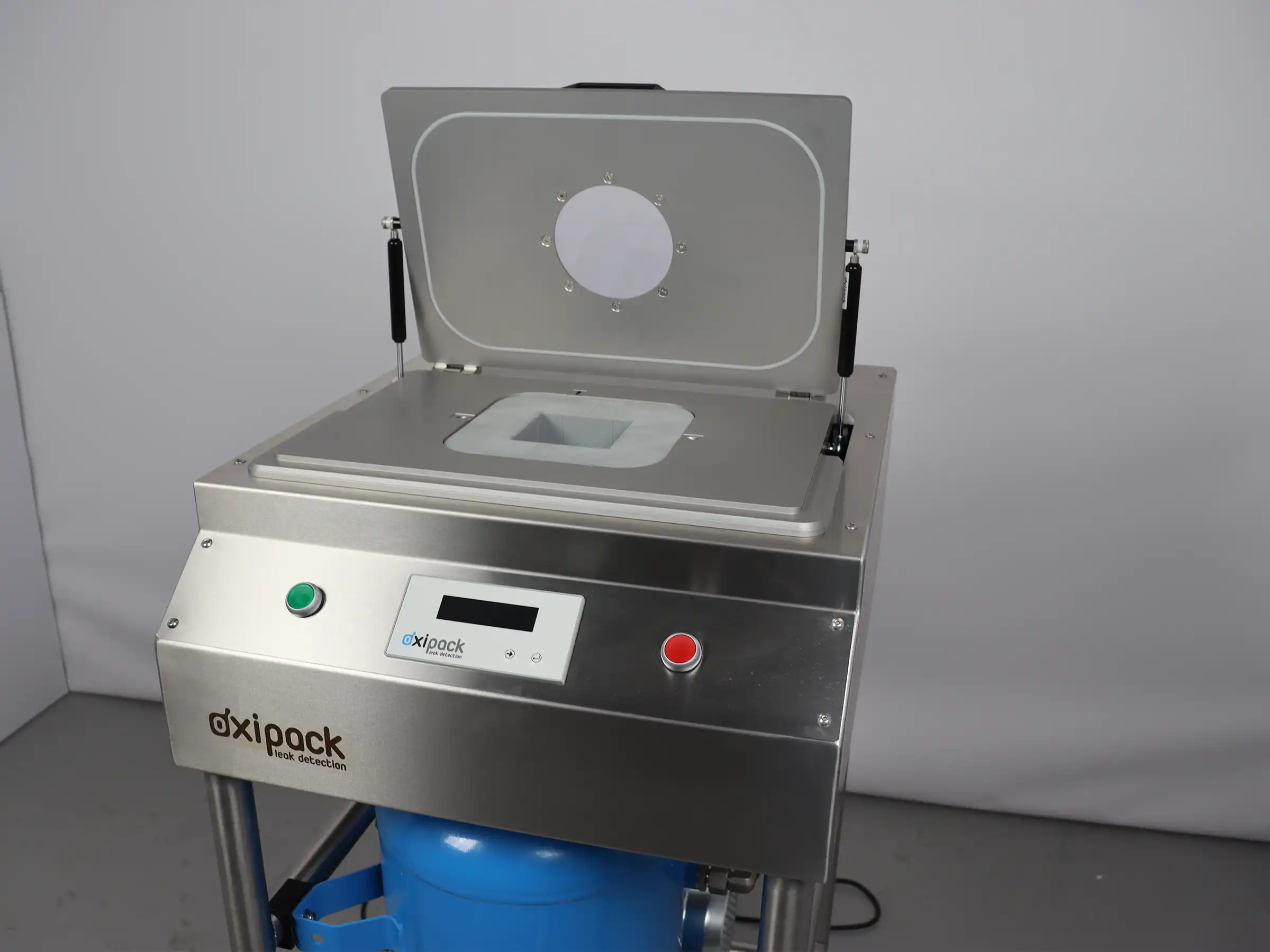
Oxipack has developed different non-destructive vacuum packaging leak testers. Our vacuum packaging testers are divided into testers for dry vacuum packs and vacuum sealed packaging with a little moisture present. The vacuum leak testers contain of the following features:
- Testing vacuum packaging
- The measurement chamber can be precisely customised using various moulds ad/or membranes for a variety of packaging
- The leak testers are ideally suited to test in an industrial or factory environment
- Simple to operate: a green light indicates the packaging is leak tight, a red light indicates a leak
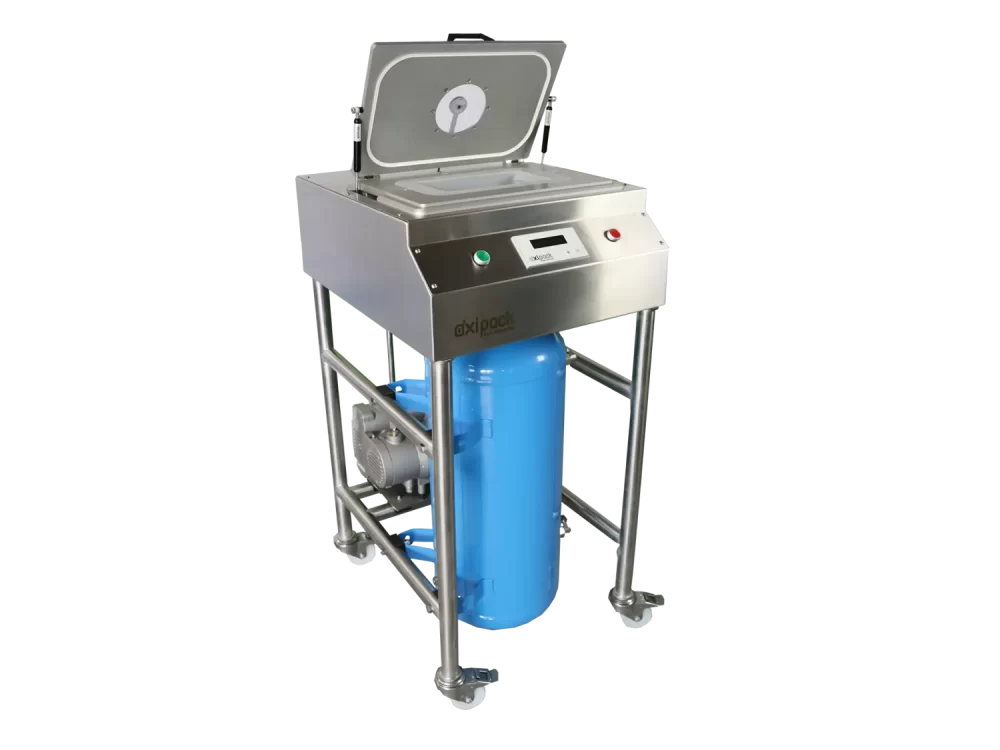
Vacuum-Sealed Leak Tester (VSLT)
The VSLT is the solution for finding (micro) leaks in vacuum sealed packaging containing solid products with moisture and a minimum of air inside, such as vacuum-packed sausages or (feta) cheese.
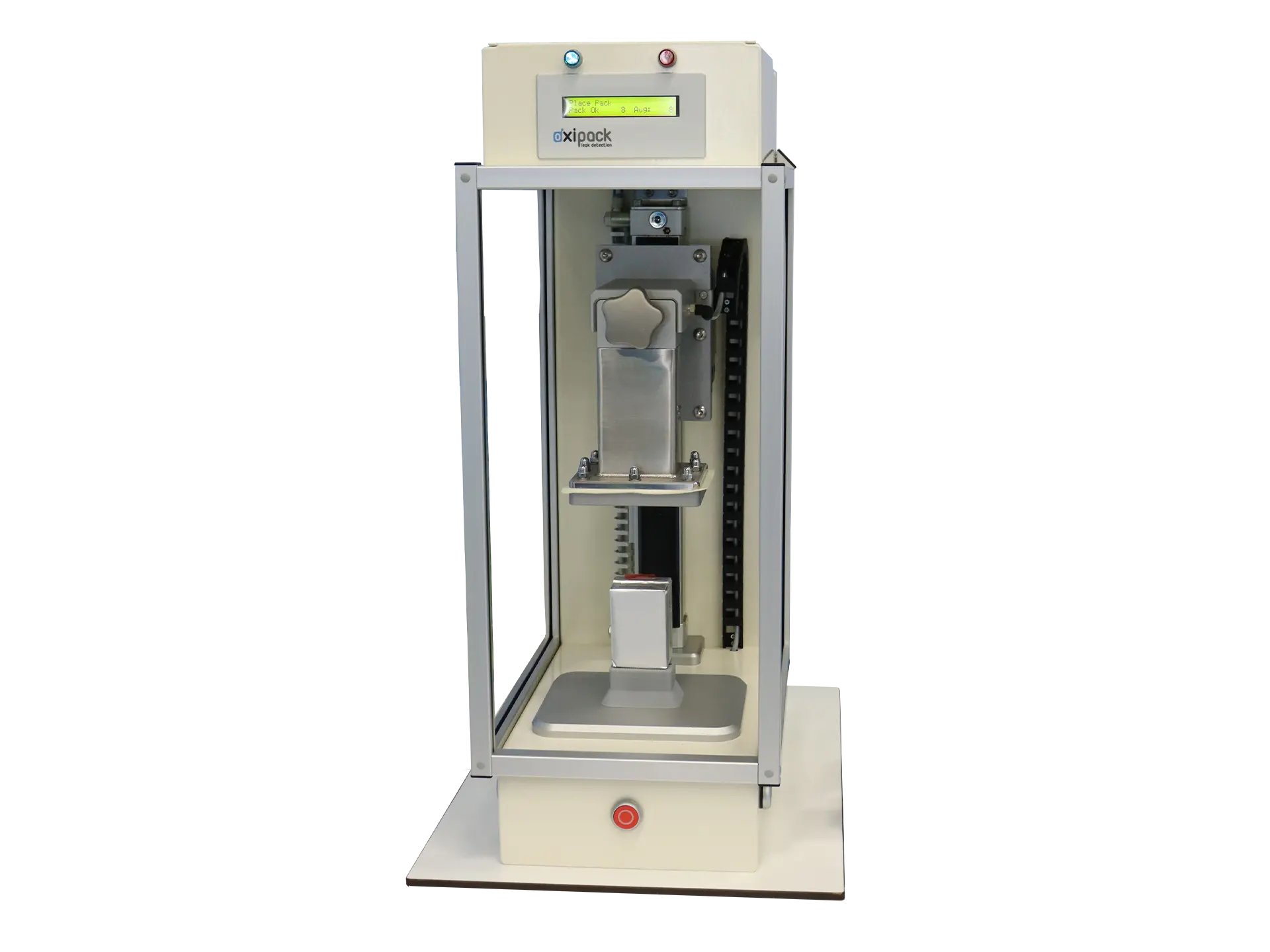
Vacuum Leak Tester (VLT)
The Vacuum Leak Tester (VLT) is an accurate leak tester to check the vacuum of packed products of various sizes, such as coffee, yeast, rice and (pistachio) nuts. These vacuum packed products have a rigid shape.
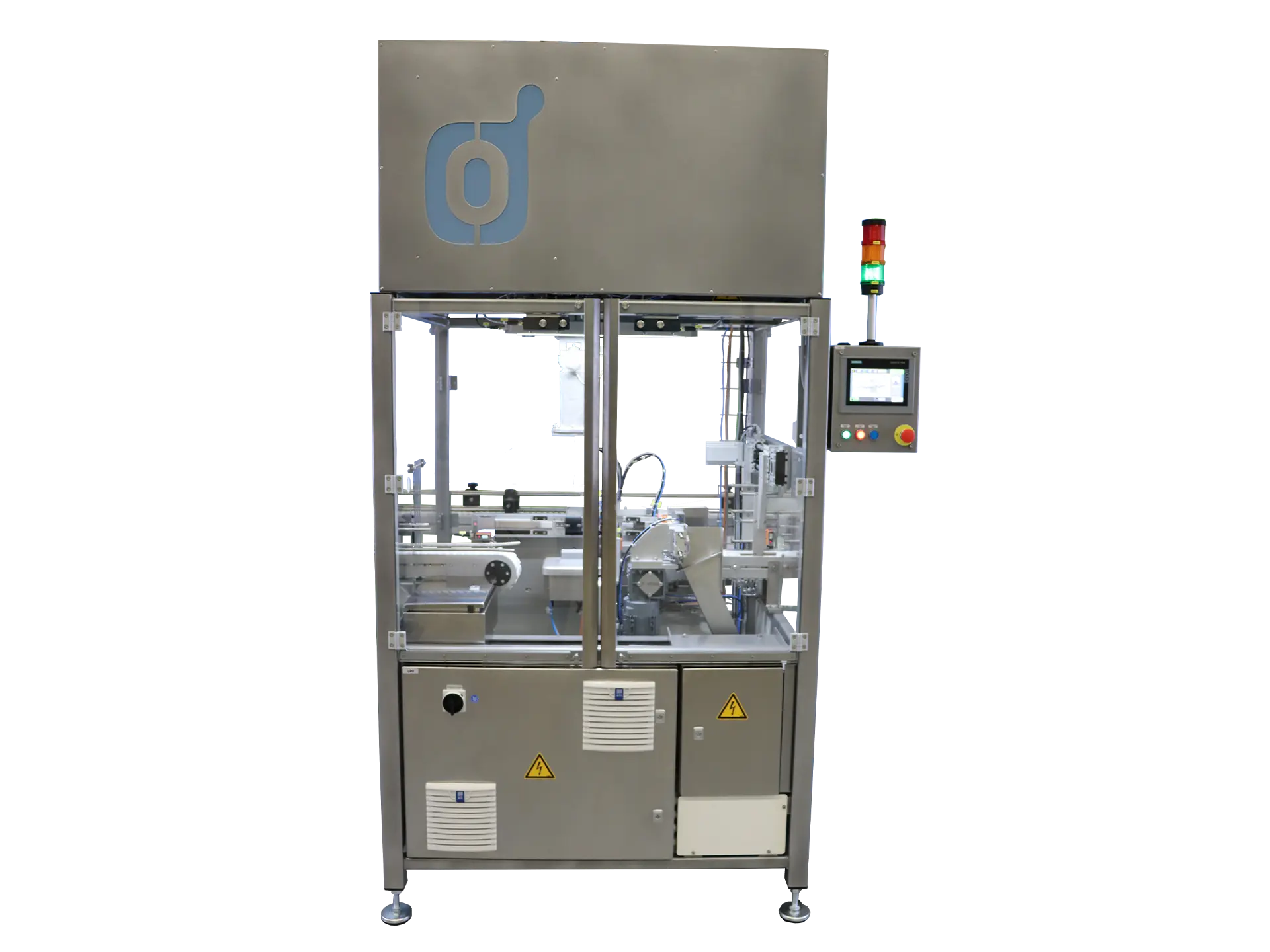
Vacuum Leak Tester Inline (VLT-I)
The Vacuum Leak Tester (semi) in-line (VLT-I) takes vacuum leak testing to the next level: it automatically selects products from the line to test them individually for microleaks.
Tailored models
With our customised models, we ensure that we can test (almost) all vacuum packaging for leaks. For products with an own or specially designed shape, Oxipack designs and realises a leak detection solution by adjusting different parts of the machine to the exact shape of your packaging.
Please contact us to find out which solution suits your vacuum packaging.
Contact Us!Non-destructive testing of vacuum packaging
Our leak detection solutions are testing in a non-destructive way, which means your packs stay intact after a leak test. Approved packages can put back into the production line. Using a non-destructive leak testing method for your vacuum packaging has several advantages:
- Better quality control: Vacuum packed products are often used to preserve the freshness and quality of products. Non-destructive vacuum leak testing helps to ensure the effectiveness of the product and that the product is properly protected.
- Higher product safety: Leaking packaging can compromise the product safety by allowing air and contaminants to enter the packaging. The non-destructive vacuum leak tester helps to identify leaks before they become a safety hazard.
- Saving costs: Leaks in vacuum packaging can lead to spoilage, waste, and recalls, which can be costly for manufacturers. Non-destructive leak testing can help to prevent these issues and save money in the long run.
- Lower environmental impact: Product recalls and waste due to leaks in vacuum packed products can have a negative impact on the environment. A non-destructive vacuum leak tester can help to prevent unnecessary waste and reduce the environmental footprint of the manufacturing process.
OUR
INDUSTRIES
FOR LEAK DETECTION
Wondering if our leak detection methods can also be used for your vacuum packaging? Check out the different industries and read more about the industry you are operating in.
-

Food packaging
-

Pharmaceutical packaging
-
Cosmetic packaging
-

Other packaging
FREQUENTLY ASKED QUESTIONS
Why is it important to detect leaks in vacuum packaging?
Detecting leaks in vacuum packaging is crucial because even the smallest leaks can significantly affect the quality of the packaged product. These micro leaks can occur during the manufacturing process of the packaging and are often difficult to detect. If vacuum packaging is not leak-tight, oxygen can enter the package, compromising the quality, freshness, and safety of the product. This can result in spoilage, discoloration, off-flavors, and the growth of harmful bacteria that require oxygen to survive. By promptly detecting and addressing leaks, manufacturers can ensure that their vacuum packaging effectively preserves the quality and safety of the packaged products. Moreover, early detection of leaks can help minimize waste, reduce the risk of recalls, and save costs associated with potential product spoilage or safety issues.
What are the benefits of using a non-destructive leak tester to detect leaks in your vacuum packaging?
Non-destructive leak testing of your vacuum packaging has several advantages, for example it ensures better product safety, higher product quality, lower environmental impact, and it will save you costs. Are you curious about how much costs it will save you? Download our free white paper or contact us via sales@myoxipack.oxipack.com.
What leak method do you use for vacuum packaging?
We have different methods of testing vacuum packaging. A pack of vacuum sausages requires a completely different method than, for example, vacuumed coffee. Contact our specialists at sales@myoxipack.oxipack.com for tailored advice.
How can I reduce storage time with leak detection?
The leaks our leak testers find are so small they would only become noticeable after hours, resulting in loose packaging. An example of saving storage time can be read in our case on vacuum coffee packaging. Contact us through sales@myoxipack.oxipack.com to learn how you can optimize your testing to avoid production of leak packaging.
What leak sizes can you find?
This depends entirely on the type of product and packaging. Often leaks which only become visible after hours or days can easily be discovered immediately after production.
What do I do with my vacuum packaging after the test?
Since the leak tester is non-destructive, the packaging can be returned to the production line.
CAN MY VACUUM PACKAGING BE TESTED?

CAN MY VACUUM PACKAGING BE TESTED?
Are you ready to make a lifelong impact in your business today? Stop wasting quality, time and money. Instead, choose Oxipack for detecting leaks in your packaging! Click below to request advice and see how our equipment can match your packaging specifications.