
MEAT PACKAGING
LEAK
DETECTION
Meat is widely consumed, which is why the meat packaging industry is a huge global market. For storage, transport, to delay spoilage and to maintain the high quality of meat, packing meat is significant. Good packaging ensures your products are protected from external influences. How do you know if your packaging protects the meat properly? Test the integrity of your packaging.
When we talk about meat, we are talking about, for example, beef, pork and poultry. Meat is the muscle tissue of an animal, processed into a high-quality food product. This quality must be maintained with packaging. The result of defective packaging is the inability to sell the meat package and it must be discarded. Therefore, leak-proof packaging is very important within this industry.
PACKAGING OF MEAT
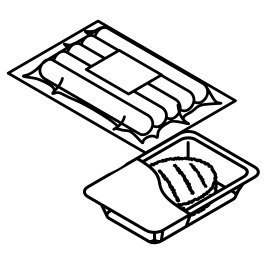
Meat is packaged to delay spoilage, avoid contamination, reduce weight loss and improve tenderness with allowing some enzymatic activity. The packaging of meat is essential, and there are several ways in which meat is packaged. Types of meat packaging are flexible, rigid and vacuum.
- Flexible meat packaging: for example the fairly new way of packaging minced meat and chicken, namely in flexible MAP-pouches. In addition, sausages or other deli meats are sometimes packed in flexible packaging. Often, sustainable meat packs are also flexible. Meat packaging pouches are tested in our standard Stationary Leak Tester, detecting leaks by the vacuum decay method.
- Rigid meat packaging: meat is often packaged in rigid packaging, such as plastic trays with sealing. Much red meat and chicken is packaged this way, but so are sliced salami or ham, for example. Meat is also packaged in cans, such as sausages or spreadable meat.
- Vacuum meat packaging: vacuum-packed meat will last longer than meat in flexible packaging or trays. Many red meats are vacuum-sealed and also sausages are often vacuum-packed.
Testing flexible meat pouches with the Stationary Leak Tester
LEAK-TIGHT MEAT PACKAGING
All such meat packages must be leak-tight. But how do we ensure this? After packaging your meat, you can test your packs with our leak detection solutions. These solutions are testing the integrity of your packaging, and giving you accurate and traceable measuring results. The machines are developed for industrial use and help reduce additional costs and waste. With these solutions, your meat packaging is less likely to be returned later in the chain.
OUR LEAK DETECTION SOLUTIONS FOR PACKING MEAT
Different leak detection solutions are developed for different types of packaging. For example, flexible MAP pouches are being tested in the Stationary Leak Tester. Rigid trays are tested in the Stationary Leak Tester XS or M and canned-meat is tested in the Can Leak Tester. These testers use the vacuum decay method to test the integrity of meat packages. Vacuum packed meat is tested in the Vacuum-Sealed Leak Tester, where another non-destructive method is used. Vacuum-sealed meat packages have a very small amount of moisture present in the packages. An insert is developed in the exact form of the vacuum-sealed meat pack, in which the pack is placed. The package is brought to a deeper vacuum, and in this way air is released from inside of the package, allowing a leak to be found.
Curious if we are able to test your meat package for leaks? Or do you have another question. Please fill in the contact form and we will address your query as soon as possible.


