

METAL
CAN LEAK
TEST
Why food is still regularly packed in cans is because it ensures a longer shelf life. Canning food products is preventing the food from spoiling or becoming contaminated. Once the canning process is complete, the sealed container creates an airtight environment that keeps the food fresh for an extended period. But to ensure the longer shelf life, the can must be leak-tight. Additionally, canning also helps to protect the food from light, moisture, and oxygen, which can cause spoilage and degrade the quality of the food. A metal can leak test can check if your cans are leak-tight.
After preparating the food to be canned, it is placed into clean, sterilized cans, leaving some headspace at the top. The metal cans are sealed with lids, and then heated to a high temperature unsing a pressure cooker or retort. This process, called thermal processing, destroys harmful bacteria and microorganisms and helps to preserve the food. The metal cans are then cooled rapidly to precent overcooking and maintain the food’s quality. This is an important process which ensures a longer shelf-life for canned food. But, canned food can only be kept longer if the cans are leak-free. If a can has a leak, its content will no longer be edible and then it should be discarded. This creates a lot of additional costs and waste, so what’s the solution? A metal can leak test, as our Can Leak Tester is capable of testing cans for leak-tightness without damaging the can or its content.
Can integrity tester
A can leak test is the right solution to test the integrity of your can. For example, metal cans or composite carton cans, with or without paper labels. The Can Leak Tester uses a non-destructive method to test your cans, testing the integrity of your packaging to improve quality control. The Can Leak Tester utilizes the vacuum decay method, with this method package defects and non-visible leakages are determined. The can integrity tester procedure ensures qualitative and quantitative results.
Metal can leak tester properties
- The can leak testing machine is capable of testing different types of cans
- Different can sizes and filling weights can be tested just by changing the clock head
- Easy to operate, a green light indicates a leak-tight packaging, a red light shows the presence of a leak
- Metal can leak testing will give you direct results
- With a robust design, so ideally suited for testing in an industrial environment
- Non-destructive leak detection
- Accurate way of testing
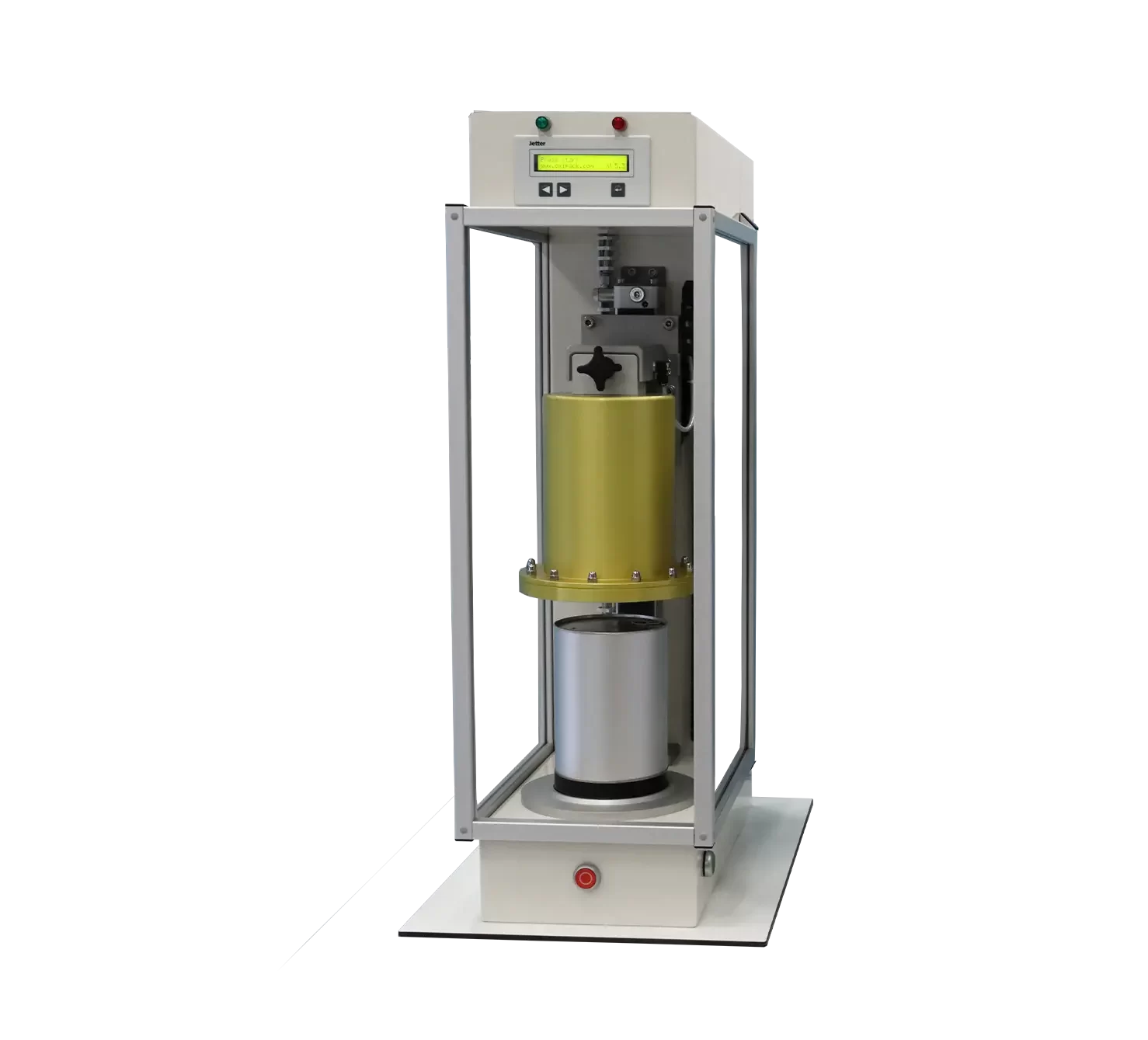
How does the metal can leak test work?
The can leak testing machine measures according to the non-destructive detection of leaks in packages by the vacuum decay method (ASTM F2338). A FDA-approved membrane is pre-formed to match the exact shape of the can, embracing the can and protecting its content. With this created membrane, a very small measuring space is created around the rigid packaging and at the same time a deep vacuum in the test chamber, while the seals and packaging is protected. Without any change in the settings, the Can Leak Tester can detect the smallest micro-leaks as well as larger leaks or open packs.
Carton can leak test
Paper-based cans, also known as carton cans, are becoming increasingly popular as a more environmentally friendly alternative to traditional metal cans. Carton cans can be susceptible to leaks and defects that can compromise the quality and safety of the food inside. The Oxipack Can Leak Tester is able to test carton cans as well. Vacuum decay testing of your carton cans is an effective method for detecting leaks in paper-based cans, because this non-destructive method can quickly and accurately detect any leaks. In addition, this method is also preferred for the development process of a paper-based can, as it will help you create a 100% leak-proof packaging.
Can Leak Tester