

Are you searching for an efficient way to ensure the integrity of your product packaging? Bubble leak testing is a popular and common test method, but it has its disadvantages. In this article, we’ll explore what bubble leak testing is, how it’s done, and the shortcomings of the method. We’ll also introduce you to the vacuum decay method, a non-destructive and more reliable alternative offered by Oxipack.
What is a bubble leak test?
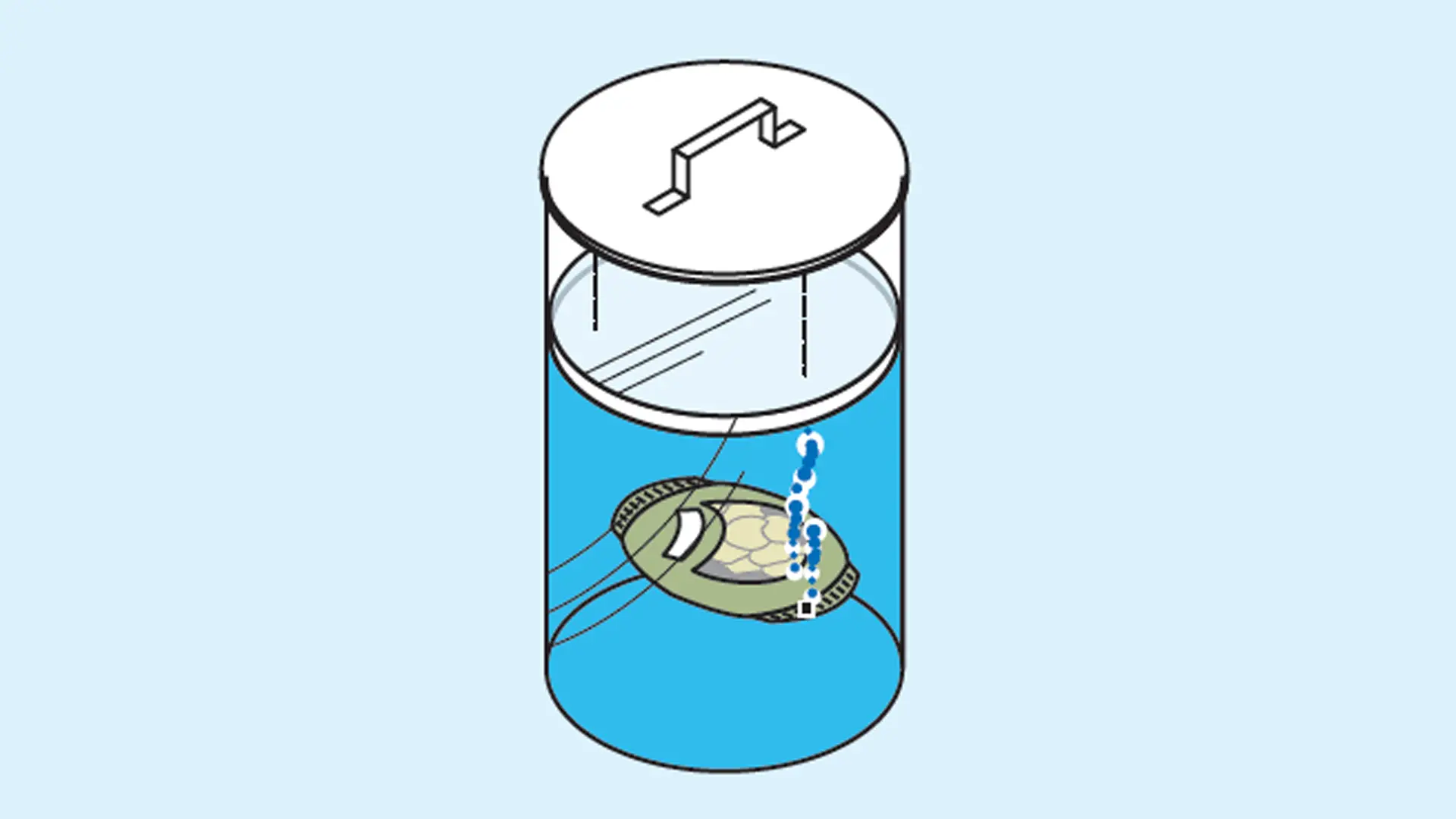
A bubble leak test, also known as bubble testing or a bubble emission test, is a method used to detect leaks in packaging by visually observing. This test involves submerging the package in water and applying pressure or vacuum to identify the presence of leaks through the formation of bubbles. The test is guided by industry standards, such as ASTM F2096 and ASTM D3078, which outline the requirements and procedures for conducting bubble leak tests.
Bubble Leak Test Method: How to Perform a Bubble Leak Test?
Here is a general overview of the bubble leak test procedure:
1. Preparation
- Prepare a container or a tank filled with a liquid or a solution. The liquid used should be compatible with the packaging material and the product being tested.
- Ensure that the liquid is at an appropriate temperature, if necessary, according to the testing requirements.
- Set up a clean and well-lit area for conducting the test.
2. Packaging preparation
- Ensure that the packaging being tested is clean and dry.
- If necessary, seal or close any openings or access points on the packaging, such as caps, lids, or seals.
- Prepare multiple packages for testing, if required.
3. Testing procedure
- Submerge the package or packages into the liquid, ensuring that they are fully immersed.
- Apply gentle pressure or agitation to the package to facilitate the release of any trapped air or gas inside.
- Observe the submerged package closely for the formation of bubbles.
- Pay particular attention to areas prone to leaks, such as seals, joints, or any identified weak points in the packaging.
- If bubbles are observed, note the location and size of the bubbles for further analysis.
4. Evaluation and interpretation
- Evaluate the observed bubbles based on predetermined criteria or standards.
- Determine whether the observed bubbles indicate a leak or if they are insignificant, such as due to air trapped during the immersion process.
- Record the results of the test, including any detected leaks or areas of concern.
Bubble Leak Testing Equipment
As described in the steps above, a bubble leak test method requires several steps. To conduct a bubble leak test, specialized bubble leak testing equipment is required. This includes a tank for water submersion, a pressure or vacuum source to manipulate the package, and a viewing apparatus to observe the formation of bubbles. The accuracy and reliability of this test depend on the operator’s skill and experience in detecting and interpreting bubbles. For more precise and quantitative leak detection, alternative methods such as vacuum decay testing may be employed.
ASTM F2096 and ASTM D3078: Internal Pressurization vs Vacuum Chamber
ASTM F2096 and ASTM D3078 are standards that outline procedures for bubble leak testing of packaging. ASTM F2096 focuses on internal pressurization for bubble leak testing. The method involves pressurizing the package from within, which forces air through any potential leaks. This causes bubbles to form, indicating the presence of leaks that could compromise the package integrity. This standard is commonly used to evaluate package reliability. In contrast, ASTM D3078 describes bubble leak testing using a vacuum chamber. The package is placed in a vacuum chamber, and the pressure is reduced. The difference in pressure between the inside and outside of the packaging leads to air leakage through any existing leaks, resulting in the formation of bubbles. This testing method is effective in identifying package leaks and assessing their impact on product protection.
Packaging Types for Bubble Leak Testing
Bubble leak testing is suitable for a variety of packaging types, including flexible, semi-rigid, and rigid packages. Common examples include plastic bags, pouches, sachets, stick packs, bottles, vials, ampoules, and medical devices.
Limitations of Bubble Leak Testing
Bubble leak testing, while a widely used method for assessing package integrity, has some limitations that should be considered. These limitations include:
- Sensitivity to leak size: Bubble leak testing may not be sensitive enough to detect very small leaks, especially in cases where the leak rate is low. It is essential to consider the required leak detection limit and determine if bubble leak testing can reliably detect leaks of the desired size.
- Dependence on bubble formation: The effectiveness of bubble testing relies on the formation of visible bubbles to indicate the presence of leaks. However, certain factors, such as the viscosity of the product or packaging material, surface tension, or the presence of foaming agents, can affect bubble formation and make it challenging to identify leaks accurately.
- Dependency on test conditions: The results of bubble emission testing can be influenced by various factors, including the test environment, pressure differentials, test duration, and operator technique. Standardizing and controlling these test conditions is crucial to ensure consistent and reliable results.
- Packaging compatibility: Bubble leak testing may not be suitable for all types of packaging materials or configurations. Some packaging materials, such as porous materials or those with high gas permeability (such as paper-based packaging), may not effectively retain the pressure required for bubble leak testing. Additionally, the testing method itself can potentially damage fragile or sensitive packaging components.
- Limited quantitative data: It provides qualitative results, indicating the presence or absence of leaks. However, it does not provide quantitative data regarding the leak rate or the extent of the leak. For applications requiring precise leak rate measurements, alternative testing methods may be necessary.
Vacuum Decay: The Non-Destructive Solution
In recent years, Oxipack has observed a growing trend among various companies reaching out to us in search of an alternative solution to traditional bubble leak testing methods. These traditional methods are not only generating significant waste, but also incurs extra costs and consumes valuable time. Recognizing these drawbacks, companies have eagerly embraced our vacuum decay testers.
With the non-destructive vacuum decay method, water is no longer required in a production environment, resulting in reduced waste and cost savings. This innovative method offers greater accuracy, enhancing quality control measures. Additionally, it provides better product protection, ensuring that potential issues are detected before they reach the market.
Oxipack’s vacuum decay testing solution has become a great example of how transitioning from the water-based bubble leak testing can lead to significant benefits. Customers have witnessed cost savings, waste reduction, improved quality control, and enhanced product protection. How the vacuum decay method exactly works is readable in our blog about the vacuum decay leak test method (ASTM F2338).
Feel free to contact us if you have any questions regarding this article, our vacuum decay method, or transitioning from a bubble leak tester to an Oxipack leak tester. Or download our free e-book with a comprehensive guideline about the transitioning from Bubble Leak Testing to Vacuum Decay Testing with flexible membranes in food package testing.
Frequently Asked Questions
What is the acceptance criteria for a bubble leak test?
According to ASTM 2096: This test method covers the detection of gross leaks in packaging. Method sensitivity is down to 250 μm (0.010 in.) with an 81 % probability. According to ASTM 3078: This testing method encompasses the identification of significant leaks in flexible packaging that contains a gas within its headspace. Test sensitivity is limited to 1 × 10⁻⁵ atm cm3/s (1 × 10 −6 Pa m3/s) or even less sensitive.
How accurate is bubble leak testing?
The accuracy of bubble leak testing depends on the size of the leak and the type of packaging material. It is generally more effective at detecting larger leaks but may not be as accurate for detecting very small leaks or leaks in certain materials.
Is bubble leak testing suitable for all types of packaging materials?
Bubble leak testing is suitable for a wide range of packaging materials, including flexible, semi-rigid, and rigid materials. However, it is important to evaluate the specific characteristics of the packaging material and consult industry standards, regulatory guidelines, and experts in packaging testing to determine the most appropriate and effective testing method for ensuring package integrity.
Can bubble leak testing be used for flexible MAP packages?
Bubble leak testing is generally not suitable for MAP packages. Since the atmosphere within the package has been intentionally modified, the presence of the modified gas mixture can interfere with the formation and visibility of bubbles during the test. The gas mixture may affect bubble formation, making it challenging to accurately detect leaks using bubble leak testing.
What are the primary advantages of vacuum decay testing over bubble leak testing?
Vacuum decay testing has several advantages over bubble leak testing, including that it is a non-destructive test and that it is often more effective at finding leaks compared to bubble testing. Namely, it is more sensitive, provides quantitative measurements of pressure changes within the package, and it can be easily automated using pressure sensors and specialized equipment. The vacuum decay testing method eliminates the need for water, reduces waste, and offers greater accuracy for quality control. It enhances product protection by detecting potential issues before reaching the market. Read more about the advantages in our free white paper.
Can vacuum decay testing be used for all types of packaging?
Vacuum decay testing is versatile and can be used for a wide range of packaging types, including flexible, flexible MAP, semi-rigid, and rigid packages. Common examples include plastic bags, pouches, bottles, vials, ampoules, and medical devices. It’s essential to consult with a professional, like those at Oxipack, to determine the best testing method for your specific packaging needs.


