
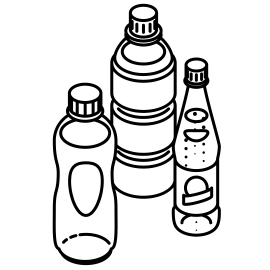
PET
Bottle
Testing
PET bottles are a widely used packaging solutions for various beverages, including water, soft drinks, juices, and other liquids. To ensure the quality, safety, and compliance with industry standards, PET bottle testing is essential. PET bottle testing refers to the evaluation and analysis of PET (polyethylene terephthalate) bottles. This involves a series of tests conducted on the bottles to assess their physical, chemical, and mechanical properties. These tests are performed at different stages, including during the manufacturing process, as well as before and after filling the bottles with a product.
PET Bottle Testing: An Important Component of Quality Control
Through PET bottle testing, the integrity of the bottles can be assessed, which is essential for preventing leaks and ensuring the safety of the contents. It also minimizes the risk of product loss, damage, and potential health hazards for consumers. Therefore, PET bottle testing is an important component of quality control and product safety.
PET Bottle Leak Testing using Vacuum Decay Method
One of the important test methods used in PET bottle testing is the vacuum decay method. At Oxipack, we utilize this method to perform PET bottle leak testing. This involves creating a vacuum to detect any leaks in PET bottles. Our PET bottle leak testing machines can detect even the smallest leaks. There are several advantages of using the Oxipack PET bottle leak testing machines:
- High precision and sensitivity: Oxipack’s machines are designed to detect even the smallest leaks in PET bottles. This allows manufacturers to have confidence that any leaks will be detected, ensuring the quality and safety of the packaging.
- Efficiency and reliability: Our PET bottle leak testing method performs test quickly and efficiently, saving manufacturers time and costs. The machine delivers accurate and reliable results, leaving no room for erroneous measurements or interpretations.
- Quality assurance and compliance with standards: The use of PET bottle testing machines ensures that PET bottles meet the required quality standards and industry regulations. This helps manufacturers comply with regulations and meet customer expectations.
PET Bottle Leak Testing Procedure
A PET bottle testing procedure is followed to ensure the quality and safety of the bottles. The PET bottle testing procedure includes several steps:
- Preparation: Prepare the PET bottles for testing by ensuring they are clean and free from any external contaminants.
- Sample placement: Place the PET bottle inside our Bottle Leak Tester.
- Leak detection: The machine will monitor the changing in the measuring space over a specific time period. Any leakage present in the PET bottle will cause pressure to change within the specific timeframe. The PET bottle testing machine will detect and indicate the presence of leaks.
- Result evaluation: The results obtained from the test will be recorded, including the pressure measurements and any detected leaks. Evaluate the results based on predetermined criteria standards.
- Analysis and decision-making: Analyse the test results to determine the quality and integrity of the PET bottles. Based on the evaluation, decide whether the bottles meet the required standards or if further actions, such as rework or rejection, are necessary.
Oxipack PET Bottle Testing
By opting for professional PET bottle testing with our machines, manufacturers can rely on the advanced technology and expertise provided. This results in a thorough and reliable evaluation of the leak tightness of PET bottles, which is essential for ensuring the quality, safety, and compliance with standards in the packaging industry. Our machines are user-friendly, and no training or course is required to operate them. For more information on this subject, please get in touch with us.